Wk1: Wheel of Questions – Kickoff

October 4, 2026

This week’s project comes from my half-bakery. It’s an idea I’ve already tried to build once, with results that were, well, less than spectacular.

Years ago, when I was working at SpinCar (now Impel), we had a tradition during our team meetings. My colleague CeeCee (Cecilia Hall) would fire up Wheel of Names, give it a spin, and whoever it landed on would have to answer a question.

We also used it during company all-hands meetings to randomly select employees for prizes. It was a simple way to add a little suspense and fun to an otherwise ordinary meeting.

But CeeCee had a frustration. The wheel was designed for names, not questions. What if, instead of randomly selecting a person to answer a question, we could spin a wheel that selected the question itself?

Naturally, I thought I could build something better.

And naturally, it wasn’t quite that simple.

My first attempt

I built a website from scratch using PHP, MySQL, and a third-party JavaScript wheel library called Winwheel.js.

Technically, it worked. Sort of.

But I could never quite get the usability right, and let’s be clear about something: I AM NOT A GRAPHIC DESIGNER.

I can write code, but I don’t do it often enough to be particularly good at it anymore. And trying to understand someone else’s code, especially when you’re working with a library that doesn’t quite do what you want, can be an exercise in frustration.

The result was functional, but utterly meh.
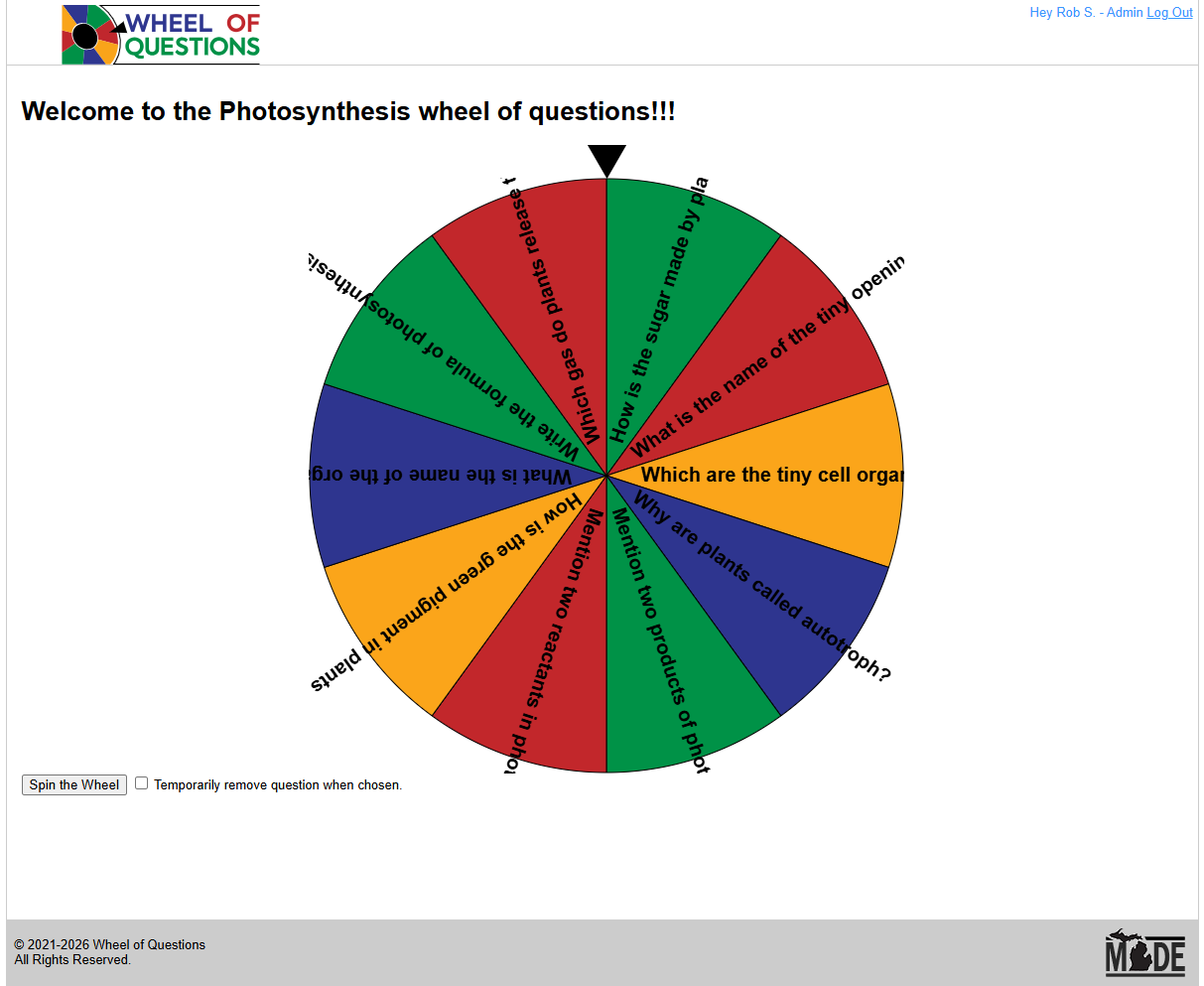
My original attempt. It worked, but nobody was going to mistake me for a graphic designer.

I left the site running anyway.

And something interesting happened. People actually used it.

Teachers, particularly foreign language teachers, created wheels filled with words and phrases for their students to translate. People made wheels for games, conversations, and all sorts of other activities. I even discovered a REALLY weird fetish-themed meet-and-greet wheel. 😅

Apparently, getting people to talk is a pretty universal problem.

Even more surprising, some people came back and used it again. This little project that I considered something of a failure had managed to find an audience.

Unfortunately, the person who originally inspired it wasn’t among them.

CeeCee actually visited the site and created an account, but she couldn’t simply paste in her list of names, and the whole experience was a bit clunky and wa missing features. She gave it a try and never looked back.
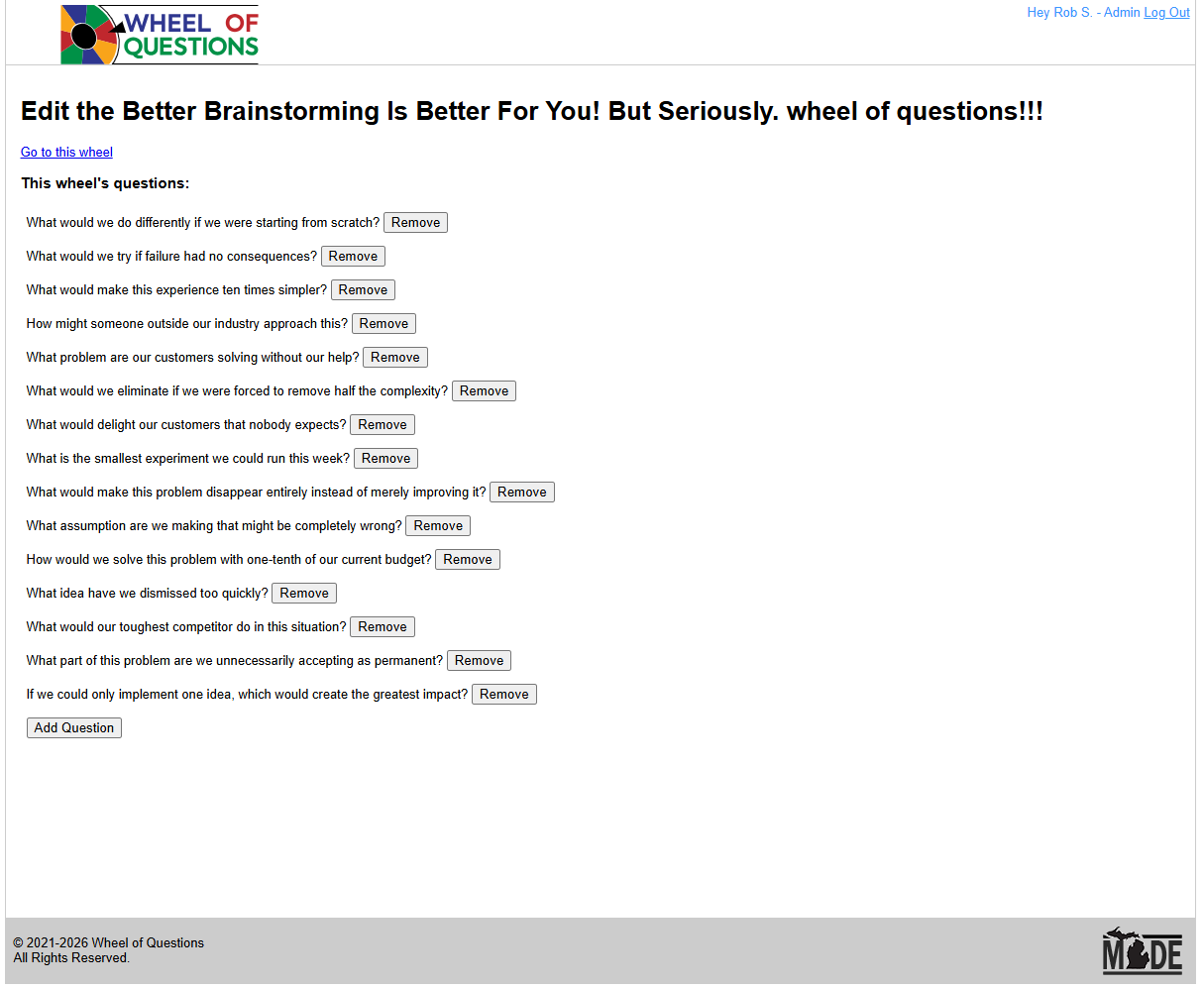
Adding questions one at a time. Apparently, pasting a list was too much to ask.

I had built something that technically solved a problem, but wasn’t good enough for the person who had the problem in the first place.

There’s probably a product management lesson in there somewhere.

Time for another spin.

I want to create something that looks great, is incredibly easy to use, and makes the simple act of randomly selecting a question feel like an event.

Think about it. For those few seconds when a wheel is spinning on a big screen, everyone in the room is watching it. The wheel has the audience’s undivided attention.

That moment deserves something more engaging than a spinning pie chart.

I want the wheel to be the star of the show.

People should be able to jump in and use a ready-made wheel, clone one and make it their own, or create something entirely new. Teachers should be able to put together an activity without fighting the interface. Someone running a meeting should be able to get everyone participating in a matter of seconds.

And yes, if someone wants to create another bizarre meet-and-greet wheel, who am I to judge?

This time, I’d also like to get away from the shared wheel library that constrained my original attempt. I’d rather have the flexibility to make the experience look and behave the way I imagine it.

Of course, imagining something and getting it to work are two very different things.

What can I build in a week?

I’m going to try to build and ship a completely new Wheel of Questions by Saturday.

Not just a prototype or a demonstration of what might eventually be possible, but an actual website people can use.

That’s a pretty ambitious goal, especially since I intend to do this through vibe coding rather than writing any of the code myself.

Over the last few years, my experience with that approach has been mixed. AI can be remarkably good at getting something working quickly. But the last 10% of a project, the little details, interactions, spacing, and visual polish that make something feel finished, can be maddeningly difficult.

It’s a bit like painting a room. The first coat goes on quickly. Then you spend the rest of the day touching up corners and wondering how you got paint on the ceiling.

My prediction? By Saturday, I’ll have a functioning site that people can actually use. Something that’s substantially better than my original attempt, both visually and functionally.

And perhaps the most important test of all?

I want to build something good enough that CeeCee would actually use it instead of Wheel of Names.

Let’s see how this goes.

One Project Every Week

October 4, 2026

Dear Product Manager, It’s Your Turn.

Dear Product Manager,

I have a problem. Actually, I have hundreds of them, and that’s really my problem. Always has been.

Everywhere I look, I see things that could work better, things that should exist, or things that I just think would be fun to explore. I’ve spent years thinking and sometimes writing about these ideas, often in my Dear Product Manager posts on LinkedIn, encouraging someone else to do something about them.

Well, it’s time to take my own advice.

I’m going to build 52 projects in 52 weeks.

Think Julie & Julia, where Julie Powell decides to cook her way through Julia Child’s cookbook in a year. Except instead of mastering French cuisine, I’ll be tackling a ridiculous collection of ideas, solving problems, and probably creating a few new ones along the way.

And unlike Julie, I don’t have a cookbook. I’m making up the recipes as I go.

Just start.

I’ve been thinking about something Gary John Bishop explores in his book Unfu*k Yourself. We spend so much time in our own heads, thinking about what we want to do, convincing ourselves we’re not ready, or waiting for the perfect circumstances to come along.

Then I saw a recent Caitlin Clark commercial with a wonderfully simple message: Start how you can.

You don’t have to be good at something to begin. You get good by showing up, trying, failing, learning, and trying again.

Two very different messengers delivering essentially the same advice.

Just start.

It sounds almost embarrassingly obvious. Yet how many good ideas never make it past the thinking-about-it stage?

I’ve certainly contributed my share to that pile in my half-bakery.

So rather than spending another year thinking about all the things I’d like to build, I’m going to see how many I can actually get out into the world.

The rules are simple.

Every Sunday, I start a new project.

Every Saturday, I ship whatever I’ve built.

That’s it. Seven days. One idea. Something to show for it.

Some projects will be useful. Some will be ridiculous. Some might be solutions to problems nobody else knew they had. And I’m reasonably certain a few will be spectacular failures.

That’s part of the fun.

I’ve been experimenting with AI-assisted development, or what the cool kids are calling vibe coding. It’s changing what’s possible for someone like me, who knows what he wants to build but hasn’t always had the technical skills, time, or patience to build it himself.

The distance between having an idea and actually building something is getting remarkably short.

AI isn’t magic. There’s still plenty of trial and error, debugging, bad assumptions, and the occasional conversation with a chatbot that makes me question which one of us is actually intelligent.

But it opens doors that used to be closed.

When is something finished?

Here’s where things get interesting.

As a product manager, I know how easy it is to keep adding features, expanding scope, and convincing yourself that something needs just a little more work before it’s ready.

There’s always another feature. Another improvement. Another reason to wait.

My wife, Sherry, is an artist. When I think about one of her ArtPrize projects, I’m reminded that artists wrestle with a similar problem. There is always another detail to refine, another element to reconsider, another brushstroke that might make the piece just a little better.

But at some point, an artist has to decide the work is finished. Not because they’ve exhausted every possibility, but because they’ve decided it’s ready to share with the world.

A painting isn’t finished because there’s nothing left to paint. It’s finished because the artist decides to sign it.

Saturday is when I sign my paintings.

If I haven’t finished, maybe I was too ambitious. Maybe I spent too much time polishing the wrong things. Or maybe I need to figure out how to build faster next time.

Whatever the reason, I don’t get another week. I get another lesson.

And on Sunday, a fresh canvas.

You’re coming along for the ride.

I don’t want this to be a collection of polished success stories written after everything has worked out.

I want to document the process while it’s happening.

The problems I’m trying to solve. The ideas that inspire me. The nits that frustrate me. The tools and AI techniques I’m experimenting with. The moments when something unexpectedly works, a solution surprises me, and the moments when everything goes sideways.

Think of it as a live journal of one guy trying to turn a year’s worth of ideas into actual things, just during nights and weekends.

I have a TON of ideas already. More than I could reasonably tackle in a year. But I also know myself well enough to predict that somewhere around week 37, I’ll be staring at a blank screen wondering what on earth to build next.

Suggestions are welcome. Especially the weird ones.

I have no idea what all 52 projects will look like, which ones will work, or what I’ll learn along the way.

But that’s kind of the point.

We spend an awful lot of time thinking about what we could do, what we should do, and what we’d do if only we had more time, resources, or expertise.

What happens when we stop waiting for all those things and just start building?

I intend to find out.

Dear Product Manager, stop adding things to the roadmap and start shipping.

And yes, I’m talking to myself.

When Changing Your Mind Feels Like Surrender

For 29 years after World War II ended, Hiroo Onoda kept fighting.

I recently listened to Werner Herzog’s The Twilight World on the Libby app (free with your local library card), and I loved both his writing style and his narration. Herzog has a way of making the story feel almost mythical without losing the strange, uncomfortable truth beneath it.

Hidden deep in the jungle on the remote Philippine island of Lubang, Onoda survived through extraordinary discipline, resourcefulness, and an almost unimaginable commitment to his final military orders to continue guerrilla resistance, never surrender, and never take his own life until he was formally relieved by a superior officer. Leaflets announcing Japan’s surrender didn’t convince him. Current newspapers didn’t convince him. Even messages and photographs from his own family were dismissed as enemy propaganda designed to trick him into surrendering.

One of Herzog’s strangest examples captures just how far that suspicion could go. Onoda and his men find a piece of chewing gum stuck beneath a bridge rail and wonder whether an American soldier left it there, or whether it was deliberately planted to mislead them. They leave it untouched. Months later, they return and Onoda is certain the gum has moved slightly. That tiny change triggers an entire spiral of suspicion: Had one of his own men secretly chewed it? Was it poisoned or drugged? Was someone lying? Something as mundane as a piece of old chewing gum becomes another piece of evidence in a war that exists largely because every piece of evidence can be made to fit it.

His greatest strength had become his trap.

Onoda’s story feels uncomfortably relevant to America today.

We increasingly live inside our own versions of the jungle; political, cultural, and algorithmic echo chambers where loyalty to the narrative becomes more important than evidence that contradicts it. New information isn’t simply wrong. It becomes suspicious. The people presenting it aren’t mistaken. They’re part of the trick.

And once you reach that point, changing your mind starts to feel like surrendering to the enemy.

That may be the most interesting lesson from Onoda’s story. Grit, discipline, conviction, and loyalty are usually virtues. But disconnected from the ability to reconsider what we believe, those same virtues can keep us fighting long after the war is over.

Sometimes the hardest form of courage isn’t holding your position.

It’s walking out of the jungle.

(The idea and final editing are me, AI helped write the middle)

Chicago Hot BBQ

Dear Potbelly Sandwich Works test kitchen,

I recently binge read Samin Nosrat‘s cookbook “Salt Fat Acid Heat” and it explained cooking the way my brain works, by starting with “why.” When I was a kid, I didn’t ask why five times to get to root cause; I asked thirty-seven times until my curiosity was completely exhausted — my poor mother!

A couple weeks ago I stopped into Potbelly and ordered my usual skinny roast beef on white with “hot peppers” AKA giardiniera. While waiting, I noticed the Sweet Heat Pork BBQ on the menu, and something clicked.

Salt, fat, acid, heat. Got it. But what about spice?

Capsaicin, the compound that makes hot peppers hot, is fat-soluble. So I started wondering: would adding giardiniera during the cooking process, infuse that signature spicy pepper flavor into the protein itself? So I bought a jar of your Hot Peppers and ran the experiment by making “Chicago Hot” BBQ pulled pork in my Instant Pot.

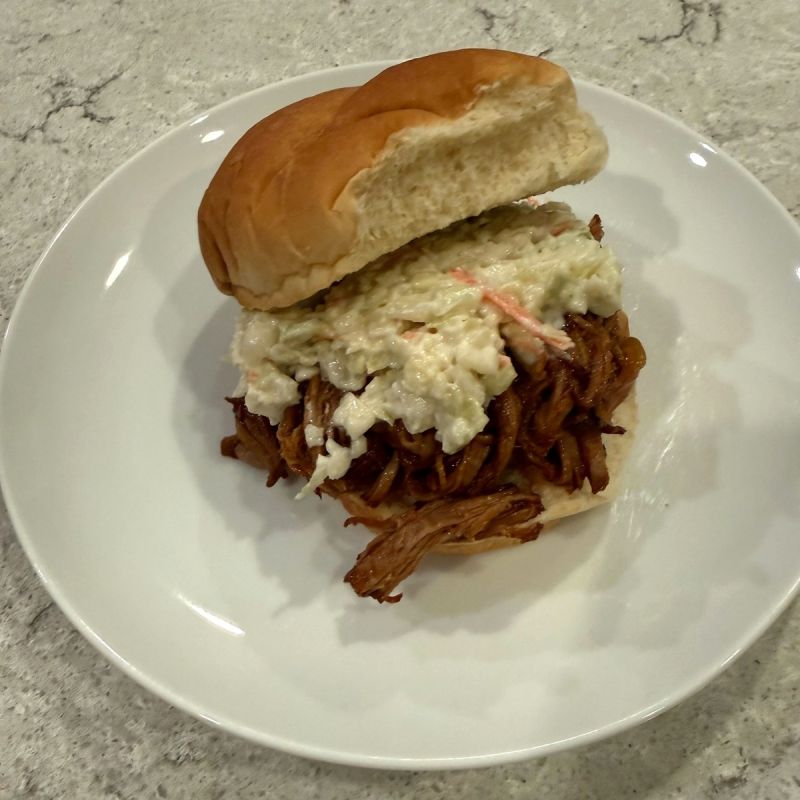
The result surprised even me. After 60 minutes under high pressure, the pork was fall-apart tender and the giardiniera spice infused directly into the meat, creating a heat that builds and lingers, balanced by sweet BBQ sauce and wet slaw.

Please give my recipe (https://chicagohotbbq.com/) a try and consider adding a “Chicago Hot” BBQ Pulled Pork sandwich to your menu.

P.s. my photography skills lag my curiosity. Who is Skeeter? Well that is a good conversation over a beer :P

To offer, or not to offer…

Dear Amazon, Etsy, and other marketplace product managers,

You should consider taking a page from Poshmark and eBay‘s playbooks and enable sellers to quickly make offers to customers that have wish listed, saved for later, or abandoned products in their carts.

Aside from cart price change notifications, there are few options to nudge me to buy the hundreds of products that I have earmarked as possible purchases on your sites. If I “add to watchlist” or “like” something on eBay or Poshmark respectively, I am likely to receive a discount – sometimes within minutes – incenting me to buy NOW!

Also consider turning the table to enable customers to make offers to sellers, which can help to signal that their price is too high; but, be sure to complete the sale automatically if the offer is accepted.

I hypothesize that increased timely interaction between sellers and customers will lead to more sales at lower prices, leading to more stickiness on your marketplace.

As Jeff Bezos said in his 2017 letter to shareholders: “One thing I love about customers is that they are divinely discontent. Their expectations are never static – they go up. It’s human nature. We didn’t ascend from our hunter-gatherer days by being satisfied. People have a voracious appetite for a better way, and yesterday’s ‘wow’ quickly becomes today’s ‘ordinary’.”

Don’t rest on your laurels, customers won’t have it!