Wk4 – Update 1

I finally have my Time Machine.

That was my reaction to playing the first Sixward prototype. Even with limited features, I was shocked by how complete the experience felt. It actually worked.

I had expected considerably less. Thit had asked more than 100 clarifying questions. The conversation had become very long, with plenty of context drift, and I figured the whole thing might have disappeared down a rabbit hole. Instead, playing it brought me right back to the feeling of first playing Ishido (but with different shapes) on Paul’s PS/1 and seeing those “amazing” VGA graphics.

A game I had imagined was suddenly a game I could play.
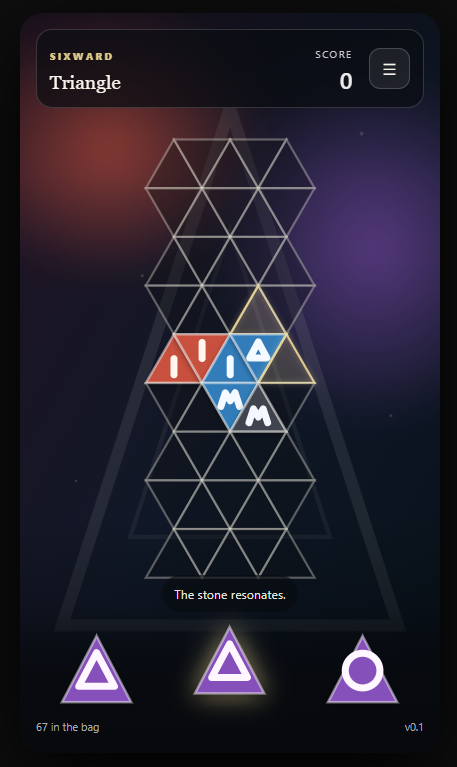
And it is fun.

I’m starting to figure out the strategy: how to maximize points instead of just placing tiles wherever they fit. More encouragingly, the friends I shared it with kept playing. They weren’t just testing it once to be polite. They kept playing.

Sherry leveled up to Square and could already see how changing the geometry would demand different patterns and a different strategy. That was a satisfying moment. Thwe did it: a game worth playing. One I could not have made myself. Not even close.

My vision, thit’s execution, for the win.

Of course, the prototype came with some prototype behavior. Wildcards weren’t following the rules correctly. That was an easy enough fix, although frustrating while I was playing. I also accidentally swiped my browser a few times and closed a game in progress. Coming back meant starting with a new board. That needs fixing.

Getting the pictures right has been a different kind of challenge.

I recently listened to Freakonomics Radio episode 619, which discussed things AI couldn’t do at the time, including understanding what was in a picture. Thit has become pretty good at that. Keeping the image creation tool focused is another matter. It has less of an attention span than a child: drifting between ideas, seemingly starting over, and leaving out something already agreed upon.

Pictures helped communicate what I wanted. Apparently, they really do say a thousand words, but those need to be exactly the right thousand words. I’m thinking about how to build may way around this. Something to put into the briefcase, or maybe its own project one week. Not sure.

Back to sharpening the axe.

Meanwhile, I got a bit inspired, or maybe it was too much Kraken and Coke.

I should have stuck with Jack, but I can’t argue with the fully working v1.0 that I could play on Monday.
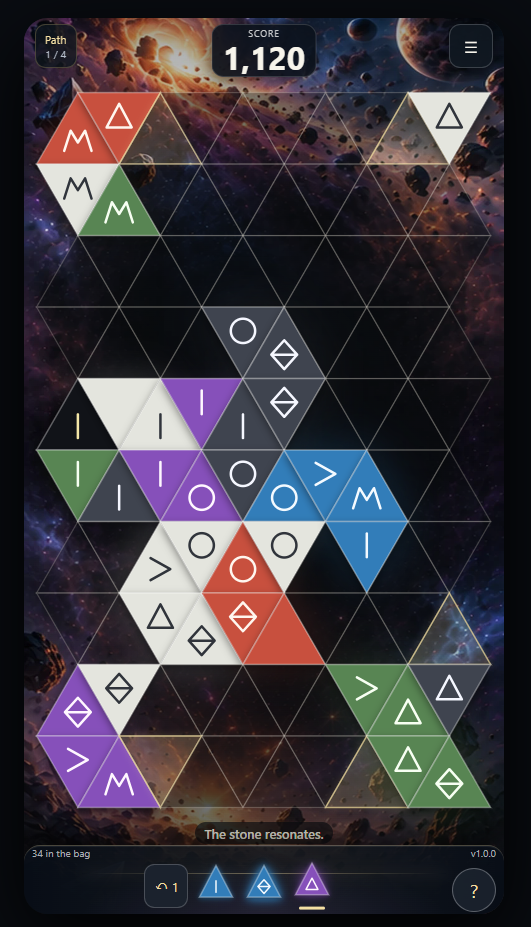
Once thit had several days of project context, it became very easy to ask for huge, complicated features with a few basic prompts.

I can always revert to a working version. Why not reach for the stars?

I ran a few more simulations using my test agent, found a few weird experiences, but it works. I could ship it today, but now I want to make it more than my first game, I want to make something that people will love to play.

There is a lot to polish about the user experience. A whole lot.

I think this is the only update this week, have a funeral to go to on Friday.

I can’t wait to share what thwe built!
Week 4: Sixward

Third time’s a charm?

I had a lot of fun making and play-testing the games for Load Goblin. There’s something really satisfying about making something that’s actually fun to play.

I’m mostly a retro gamer. I enjoy games that don’t require a massive story arc, hundreds of hours to finish, and ten times that to complete everything accomplishments. Gotta catch ‘em all! Give me ten minutes of digital pinball and a chance to beat my all-time high score, anytime!

My brother Paul came home from the Army with an OG IBM PS/1 computer. That thing had VGA graphics! My Tandy 1000 had nothing on it. Two games I particularly enjoyed were Lemmings and Ishido.

Later, I got Ishido for the Atari Lynx, playing it on Uncle Karl’s early high-resolution color handheld.

I loved the strategy, the lore, and the almost Zen-like experience of this solitaire game. It reminded me a little of Shanghai (mahjong solitaire).

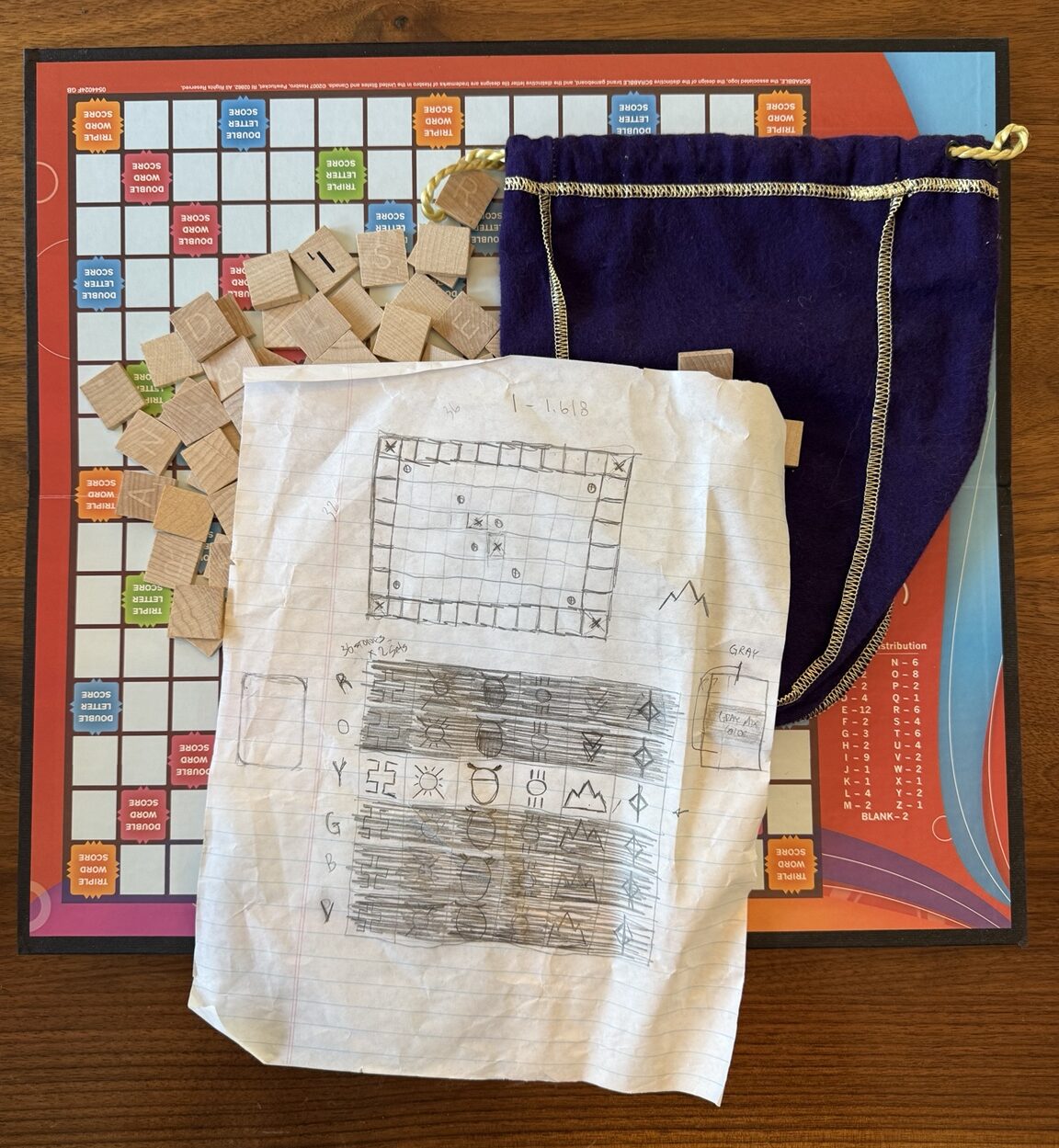
I liked it enough that I tried making a physical version using modeling clay. I designed the pieces, but never finished it.

Years later, I got a wood-burning kit for Christmas and thought I could make one using wooden Scrabble tiles. The sanding wasn’t going well, and I valued my fingertips more than finishing the project.

Twice half-baked. I do like a twice-baked loaded potato skin… 🤤

Where did the idea come from?

I wasn’t originally trying to reinvent Ishido. I just wanted to make a physical version.

Sometimes there’s something satisfying about tactile things. Like kindergarten, when everything was something you could pick up, touch, and play with.

Sherry gave me a wooden Sudoku set that I really enjoy. It’s much slower than my normal speed runs on Sudoku apps, but there’s something therapeutic about that.

My one real departure from Ishido was wanting symbols that meant something to me, making the experience a little more personal.

Now, for the first time, I have the ability to build the game in a format I never thought I’d be able to create myself: a video game.

Third time’s the charm? Or maybe trice-baked?!

What am I trying to make?

A game that’s fun to play. That’s it.

My other projects have been fairly niche or require some commitment. This one should be something anyone can open in a browser and start playing immediately.

A few minutes of entertainment, some brain chemicals flowing, maybe a new high score.

Thwe’re calling it Sixward. Six colors, six symbols, with a goal of getting a high enough score, or enough achievements to get to the next level forward.

Thwe’re starting with the ideas behind Ishido, but exploring some new mechanics involving colors, symbols, scoring, and harmonic combinations.

I haven’t even settled on whether to begin with traditional square stones or something different.

I love the idea of progression. Get a high enough score or achieve harmonic perfection, and unlock another way to play.

But first, we need to make the basic game fun.

What do I hope to demonstrate on Saturday?

Something people actually want to play again.

Success isn’t just getting people to click the link. It’s repeat players, games played, and maybe people inviting their friends.

You should be able to start playing without registering. Once you’ve unlocked an achievement worth keeping, you can create an account to save your progress.

If somebody enjoys it enough to share it with a friend, that’s a pretty good indication that we’ve made something worthwhile.

What could go wrong?

I’ve never designed game mechanics before.

We could easily disappear down some rabbit hole and come out with something that technically works but isn’t the experience I wanted.

My stretch goals are pretty audacious. I’d love to turn this into an iOS app (someday)/ And we’ve even discussed a spherical playing field, which is a little nuts to put my brain around. Something I can imagine, but could never actually code myself.

But I can’t skip ahead. We have to prove the basic mechanics work before expanding the experience.

Visual design is another potential trap. Working with AI on visual experiences has been challenging to say the least, and I don’t want to spend the whole week making things look beautiful at the expense of making a fun game.

Especially with a shorter Sunday than usual, we’ll need to stay focused. Go Blue, beat Houston! Go Lions, beat the Pack!

How should the story end?

With a game I love playing myself.

I could care less if anyone else plays it. But I bet if I enjoy it, plenty of other people will too.

And unlike Load Goblin, nobody has to take my word for it or own a physical Timex Sinclair 1000 to experience what thwe’ve built.

Just click a link and play.

There’s practically no barrier to trying it.

Who wouldn’t try a game?!