Wk 1 – Update 2
October 8, 2026 Leave a Comment
A spinning pie chart needs a better stage.
We added themes to Wheel of Questions. Users could change the colors, adjust the look and feel, and give their wheel a little personality.
It felt a bit like giving a kid a box of broken remnant crayons. Plenty of choices, but the materials weren’t doing anyone any favors.
Underneath it all, we still had a spinning pie chart with some pizzazz around the edges.
For those few seconds when the wheel is spinning, everyone in the room should be watching. I want a little anticipation. Something that feels like an event. Changing the colors wasn’t going to get us there.
We needed better design.
This is where AI’s image generation abilities became particularly useful. As previously established, I AM NOT A GRAPHIC DESIGNER. But I can describe what I’m imagining, react to what comes back, and keep asking for changes. I am persistent!
Our first attempt was a game show set: an over the top dramatic stage, lights, and room in the center for the wheel. No contestants. We already have an audience on the other side of the screen.
Originally, the base was part of the background image, and the title just floated above the wheel. It looked promising at the right screen size. But the base belonged to the background while the wheel moved and resized with the page. They weren’t necessarily going to stay attached. And the floating title needed somewhere to live.
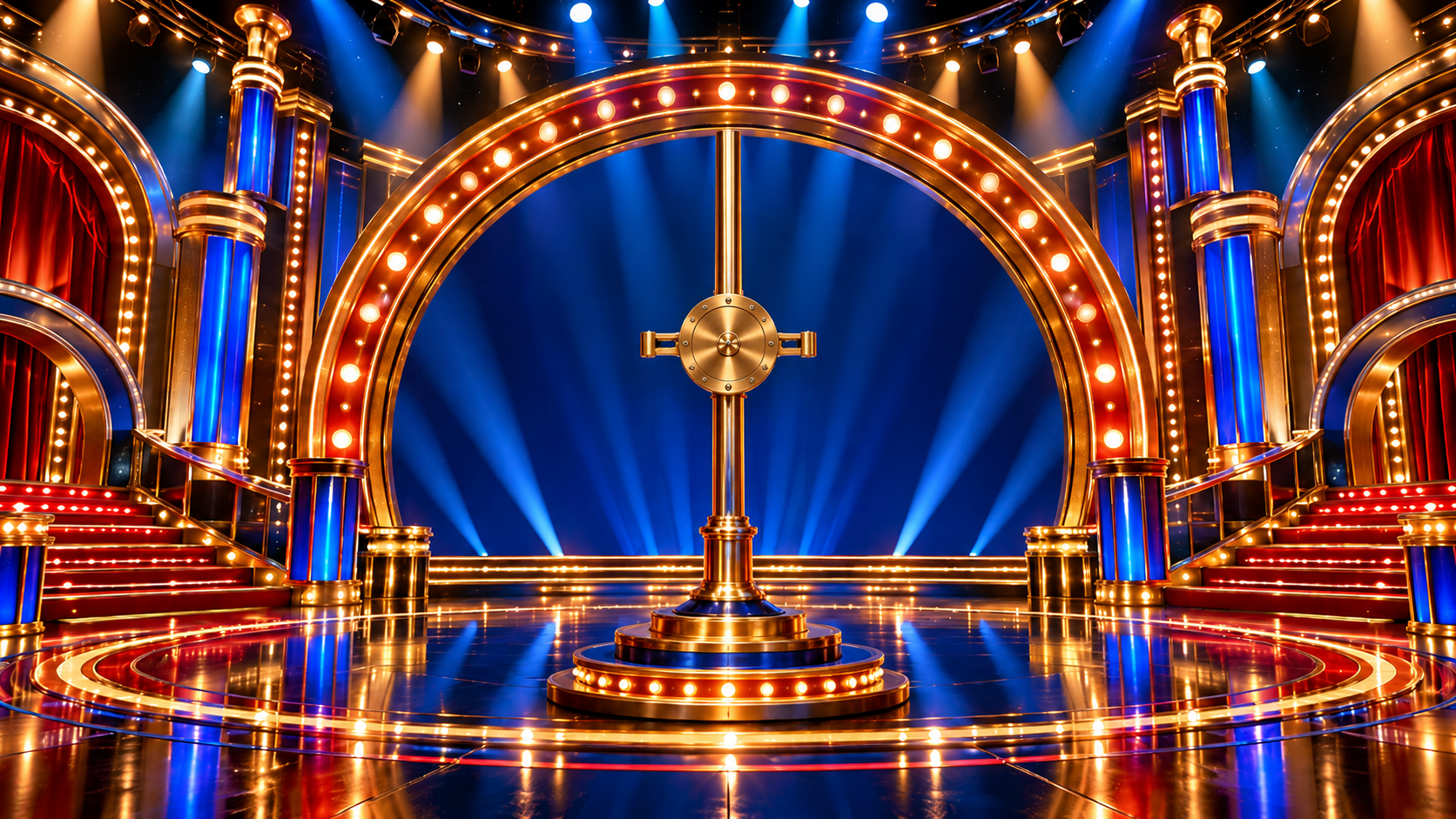
So we separated the base from the background and created a marquee for the title. The background established the setting, while the base and marquee moved with the wheel as a single composition. The wheel finally had something to stand on, and its title had a proper home.
Keeping those pieces separate meant we could position them around the actual working wheel and put real, changeable text on the sign. A beautiful picture of a wheel would have been considerably easier. Unfortunately, it wouldn’t spin.
Getting those pieces to line up was painful. Move the marquee down. Move the wheel up. Show more of the base. Now the title doesn’t fit. Something would finally look right on my desktop, then I’d resize the window or go full screen and discover that the pieces had developed independent ambitions.
Responsive web design is a lovely concept until you’re trying to keep a wheel attached to its own pedestal, and have a marquee stay where you want it to.
Eventually, we put those positioning and spacing settings into a theme editor. I could adjust the layout myself without another code change and upload every time something needed to move a few pixels.
The result was a BIG improvement. The wheel finally looked like it belonged somewhere.
But it still wasn’t a magical moment. The lights in the picture looked like lights. They didn’t actually do anything. Even “marching ants” would add life to a still screen.
I kept thinking about the way Ken Burns brings still photographs to life in his documentaries using the Ken Burns effect. A slow pan or zoom guides your attention and makes a motionless image feel like part of an unfolding story. That became an inspiration: we already had the artwork. Could we bring it to life through movement and light?
Our approach was to add animated lighting overlays. The picture stays still, but the light moves. It’s related to techniques like cinemagraphs, where selected movement makes an otherwise still scene feel alive. I’m not quite sure if this concept is novel enough to be named the “Streeter effect,” but we’re going to run with it until a lighting designer or patent attorney objects.
We added two kinds of lights to the editor. Bulbs could sit over the lights painted into the artwork, glow, pulse, or chase in groups. Moving spotlights could cast beams across the scene and sweep around the wheel.
I could place them directly over the images, change their position and intensity, and adjust their motion effects. Preview, tweak, try again. All without shipping more code.
That made a spectacular difference.
The stage suddenly had energy. The bulbs and sweeping beams gave the audience something to watch while the wheel spun. The artwork hadn’t changed, but the experience had. It finally felt like an event.
 About Rob