Week 1: Wheel of Questions
October 4, 2026 Leave a Comment
This week’s project comes from my half-bakery. It’s an idea I’ve already tried to build once, with results that were, well, less than spectacular.
Years ago, when I was working at SpinCar (now Impel), we had a tradition during our team meetings. My colleague CeeCee (Cecilia Hall) would fire up Wheel of Names, give it a spin, and whoever it landed on would have to answer a question.
We also used it during company all-hands meetings to randomly select employees for prizes. It was a simple way to add a little suspense and fun to an otherwise ordinary meeting.
But CeeCee had a frustration. The wheel was designed for names, not questions. What if, instead of randomly selecting a person to answer a question, we could spin a wheel that selected the question itself?
Naturally, I thought I could build something better.
And naturally, it wasn’t quite that simple.
My first attempt
I built a website from scratch using PHP, MySQL, and a third-party JavaScript wheel library called Winwheel.js.
Technically, it worked. Sort of.
But I could never quite get the usability right, and let’s be clear about something: I AM NOT A GRAPHIC DESIGNER.
I can write code, but I don’t do it often enough to be particularly good at it anymore. And trying to understand someone else’s code, especially when you’re working with a library that doesn’t quite do what you want, can be an exercise in frustration.
The result was functional, but utterly meh.
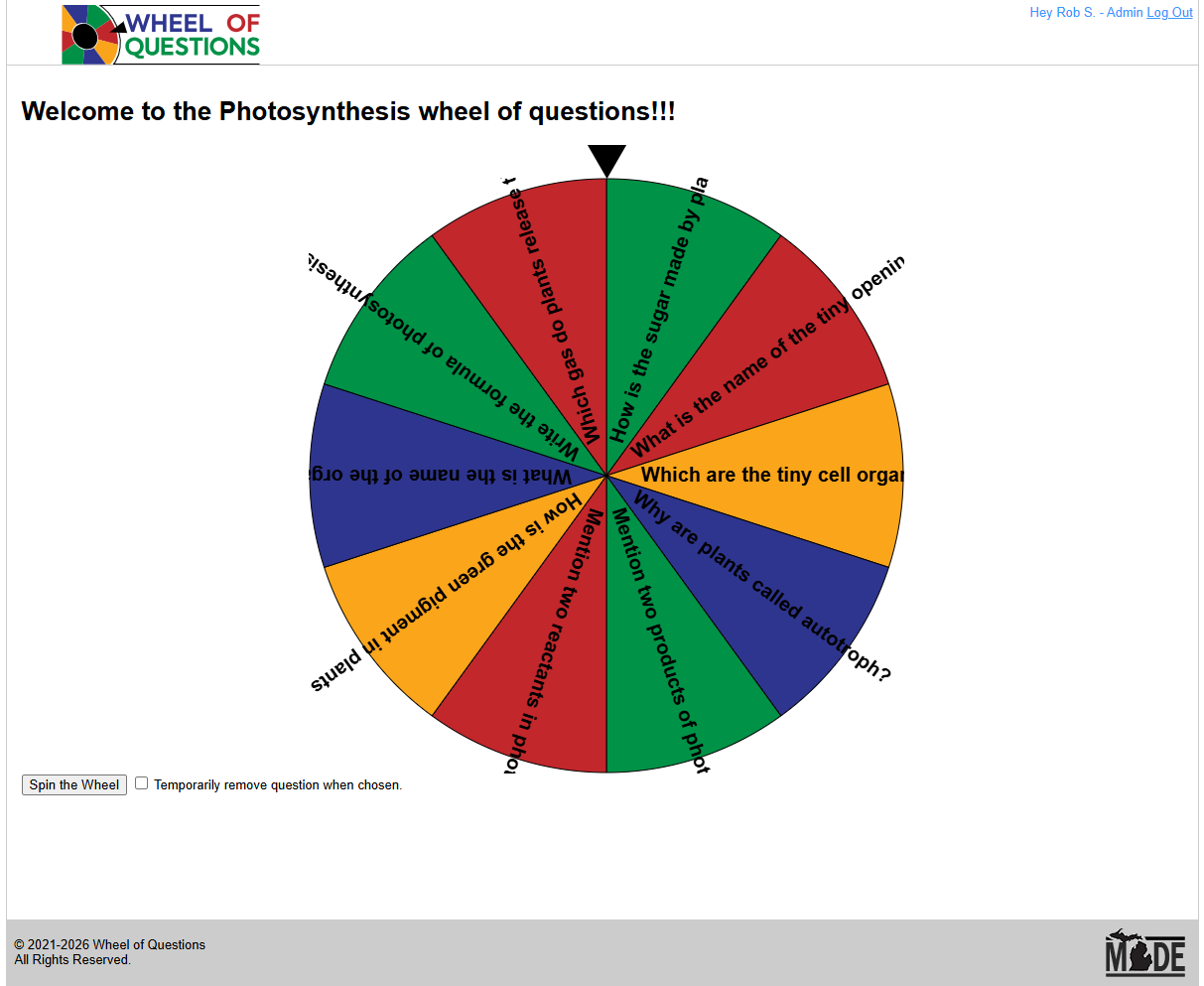
I left the site running anyway.
And something interesting happened. People actually used it.
Teachers, particularly foreign language teachers, created wheels filled with words and phrases for their students to translate. People made wheels for games, conversations, and all sorts of other activities. I even discovered a REALLY weird fetish-themed meet-and-greet wheel. 😅
Apparently, getting people to talk is a pretty universal problem.
Even more surprising, some people came back and used it again. This little project that I considered something of a failure had managed to find an audience.
Unfortunately, the person who originally inspired it wasn’t among them.
CeeCee actually visited the site and created an account, but she couldn’t simply paste in her list of names, and the whole experience was a bit clunky and wa missing features. She gave it a try and never looked back.
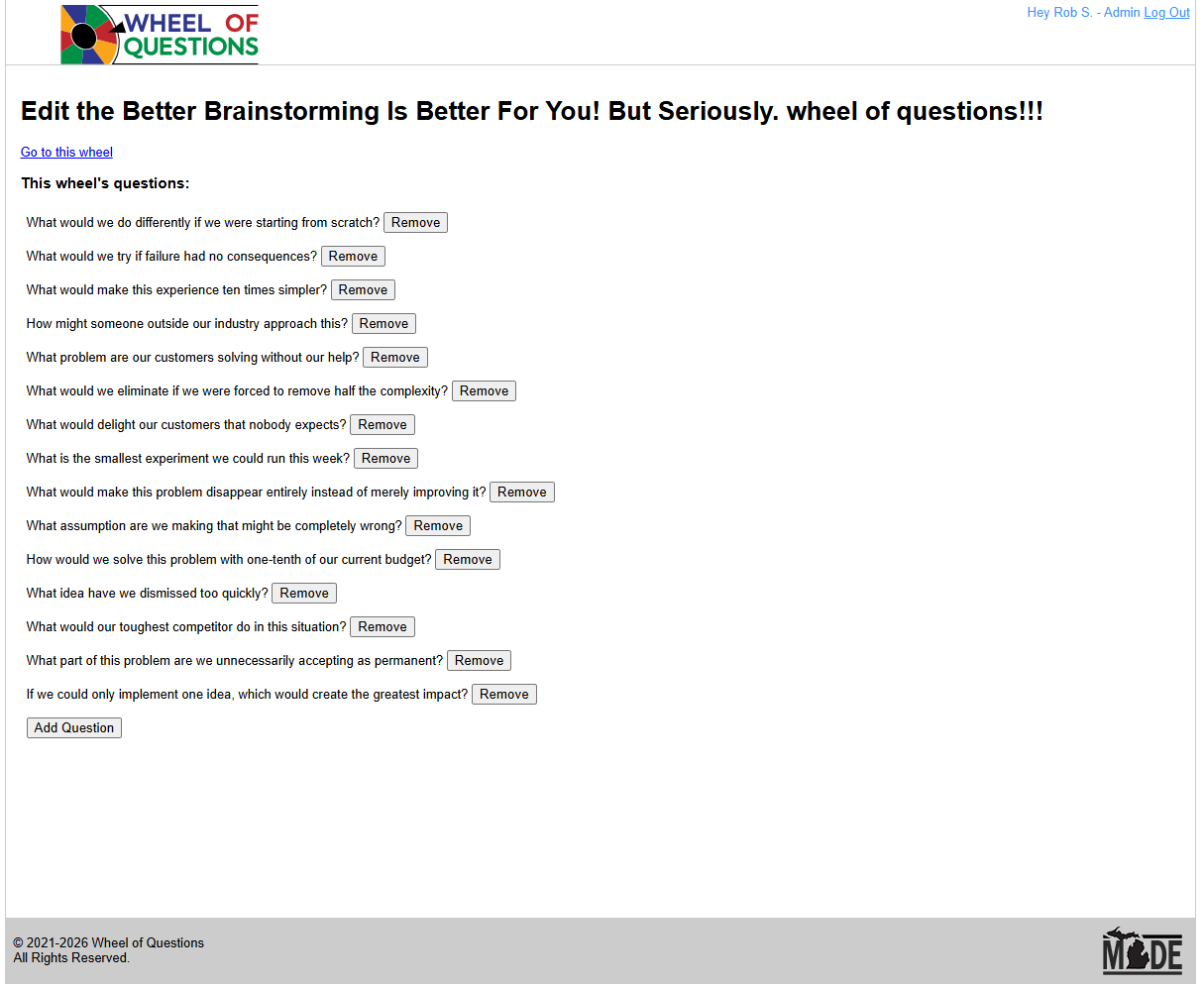
I had built something that technically solved a problem, but wasn’t good enough for the person who had the problem in the first place.
There’s probably a product management lesson in there somewhere.
Time for another spin.
I want to create something that looks great, is incredibly easy to use, and makes the simple act of randomly selecting a question feel like an event.
Think about it. For those few seconds when a wheel is spinning on a big screen, everyone in the room is watching it. The wheel has the audience’s undivided attention.
That moment deserves something more engaging than a spinning pie chart.
I want the wheel to be the star of the show.
People should be able to jump in and use a ready-made wheel, clone one and make it their own, or create something entirely new. Teachers should be able to put together an activity without fighting the interface. Someone running a meeting should be able to get everyone participating in a matter of seconds.
And yes, if someone wants to create another bizarre meet-and-greet wheel, who am I to judge?
This time, I’d also like to get away from the shared wheel library that constrained my original attempt. I’d rather have the flexibility to make the experience look and behave the way I imagine it.
Of course, imagining something and getting it to work are two very different things.
What can I build in a week?
I’m going to try to build and ship a completely new Wheel of Questions by Saturday.
Not just a prototype or a demonstration of what might eventually be possible, but an actual website people can use.
That’s a pretty ambitious goal, especially since I intend to do this through vibe coding rather than writing any of the code myself.
Over the last few years, my experience with that approach has been mixed. AI can be remarkably good at getting something working quickly. But the last 10% of a project, the little details, interactions, spacing, and visual polish that make something feel finished, can be maddeningly difficult.
It’s a bit like painting a room. The first coat goes on quickly. Then you spend the rest of the day touching up corners and wondering how you got paint on the ceiling.
My prediction? By Saturday, I’ll have a functioning site that people can actually use. Something that’s substantially better than my original attempt, both visually and functionally.
And perhaps the most important test of all?
I want to build something good enough that CeeCee would actually use it instead of Wheel of Names.
Let’s see how this goes.
 About Rob